Just How To Read A Peptide Pureness Examination: Hplc, Mass Spectrometry And Coa Interpretation For Uk Scientists 2026
- Purity ranges commonly, from 40% to 80%+ depending upon sequence size and difficulty.HPLC informs you what percentage of your sample is the main substance-- yet it does not verify what that main substance actually is.Examinations can be performed making use of high-precision stabilization chambers, imitating different atmospheres, and using global criteria to study short-term and long-term stability, vital for consistent peptide efficiency.As long as you acquire peptides from a relied on resource that offers a full certificate of evaluation, you can be certain in the peptide's pureness quality and use extent.
Quality Assurance And Product Compliance In The Pharmaceutical Industry
HPLC procedures chromatographic purity by separating the target peptide from associated contaminations and computing main-peak area percent. Mass spectrometry validates molecular identity by checking whether the determined mass matches the anticipated peptide mass. For research-grade peptide certification, HPLC and LC-MS/ESI-MS answer different inquiries and ought to read with each other. BOC Sciences additionally supplies extensive in vitro (cell platforms) and in vivo (animal systems) testing solutions to help customers fully understand peptide solution performance in different environments. In vitro examinations analyze peptide cytotoxicity, cell uptake, anti-inflammatory activity, and much more, supplying basic information sustain for peptide applications in clinical visual appeals and biomedical fields.
These modifications transform the peptide's biological activity and chromatographic profile. Peptides are sensitive to temperature, light, and enzymatic settings, making them susceptible to destruction, which affects efficacy. BOC Sciences supplies accelerated stability, light stability, and chemical deterioration experiments to systematically analyze formulation stability dangers.Imaginative Peptides proposes a collection of various pureness levels to assist you choose the right peptide pureness for peptide-based assays and applications. The complying with checklist reveals the advised peptide pureness degrees needed for numerous peptide applications. Peptide recognition is largely executed utilizing mass spectrometry (MS), which supplies accurate measurements of peptide molecular weight. Additionally, techniques such as amino acid evaluation and HPLC are utilized to verify the peptide's identification and pureness, guaranteeing precise characterization for different applications. We supply peptide identification verification using mass-based approaches picked for the example and analytical function. This is very important when the primary inquiry is whether the observed part matches the intended peptide or whether an alteration has actually been included as anticipated.
Why Should Scientists Demand Third-party Recognition?
For scientists, acquiring verified peptides isn't simply a procedure-- it's the structure of trusted experiments and study reproducibility. Poor-quality peptides (those with unseen contaminations, incorrect sequences, or degraded components) can result in misleading information and irreproducible results. Actually, healthy proteins and peptides are among the most commonly used lab reagents, yet research studies have shown that their high quality is often insufficient, leading to bad information reproducibility. Beginning with appropriate research laboratory recognition is as a result a vital part of a scientist's quality control operations.
For most readers of a peptide beginners' overview, "research-grade" is the world you run in. It ensures you that the peptide will execute well in experiments (assuming purity and identity are as specified), but it additionally carries the caution "Research Use Just." This expression is typically printed on the vial or documentation. It works as a reminder and lawful disclaimer that the item is not a restorative or consumable.What Is Hplc? The Standard Concept
FDA and the European EMA have established standards mandating extensive evaluation and quality assurance for peptide products to Direct SARMs products guarantee security and effectivenessr. In the context of pharmaceutical or clinical-grade peptides, research laboratory recognition is important to fulfilling these guidelines. For instance, before a peptide medication can enter human trials, its supplier needs to show the identification, purity, potency, and safety and security of the peptide through verified analytical methods. Peptide purity testing data are obligatory in preclinical studies and need to be consisted of in investigational new medicine (IND) applications and later brand-new medication applications (NDAs).BOC Sciences, with its durable analytical platform and specialist team, concentrates on top quality testing solutions for peptide resources, peptide microspheres, peptide nanoparticles, and peptide formula prep work. We work with biotech, pharmaceutical, CRO, CDMO, and scholastic teams on peptide chemical and physical analyses that sustain research and non-clinical choice making. Contact us today to review your peptide series, sample status, and analytical goals.
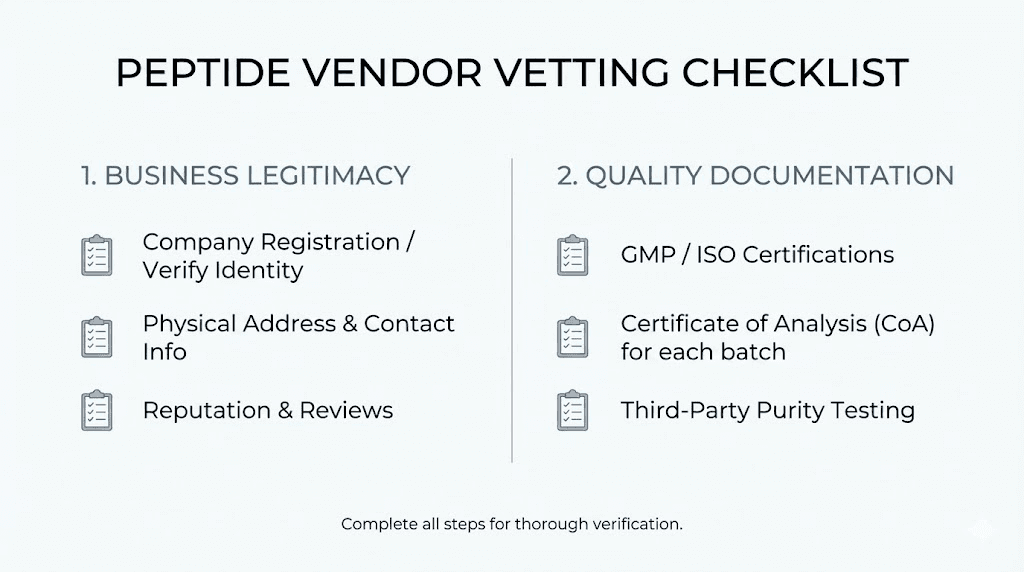
Along with HPLC and MS, specialized labs might employ orthogonal strategies for included accuracy. As an example, capillary electrophoresis can be made use of to separate very hydrophilic peptides or to verify outcomes, and MALDI-TOF mass spectrometry can assist in mapping bigger or modified peptides. Several peptide producers or distributors will certainly give a COA (Certification of Evaluation), as an example our bpc 157 tb 500 blend, that includes the purity percentage by HPLC and identification verification by MS for every set. Top-tier labs usually report peptide purity well above 95%, regularly ≥ 98-99%, by utilizing cutting edge HPLC and MS evaluations. They additionally evaluate both resources and ended up peptide vials, which assists catch any kind of impurities, deterioration products, or formula disparities.